If you are renting a storage unit, you already know the pattern. You drive across town, punch in a gate code, walk down a hallway or roll up a door, grab what you need, and drive home again. And every month, the payment comes out — for a space you will never own.
A shed in your own yard works differently. It costs money up front or month to month for a set term, and then it is yours. This post walks through the honest math on both, so you can see which one fits your situation.
THE REAL COST OF A STORAGE UNIT
Storage units look cheap because the monthly number is small. The trouble is that the number never ends.
Say you pay $100 to $150 a month for a medium unit — a common range, and rates vary by town and facility. At $125 a month, that is $1,500 in the first year. In three years, you have paid $4,500. In five years, $7,500.
At the end of all that, you own nothing. If you stop paying, you have to empty the unit, usually on a short deadline.
There are other costs that do not show up in the monthly rate. There is the drive time and fuel every time you need something. There is the stuff you buy twice because the first one is buried in the unit and it is easier to buy another than to go dig for it. And there are rate increases — most facilities raise rent over time, and moving everything to a cheaper unit is a big enough job that most people just pay the increase.
None of that means a storage unit is a bad choice. For a short move, a remodel, or a few months between houses, renting makes sense. The problem is when a short-term fix quietly turns into three or four years of payments.
WHAT OWNING A SHED CHANGES
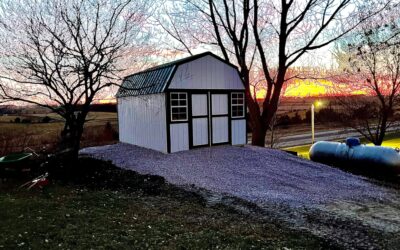
A shed sits steps from your back door. The mower, the snowblower, the bikes, the holiday totes, and the tools are there when you need them — no gate code, no hallway, no drive.
The cost also has an end date. Buy outright and you pay once. Use rent-to-own and you pay a set monthly amount for a set term — 12 to 60 months at 605 Sheds — and when the term is done, the shed is yours. No more payments after that.
A shed can also add usable value at home. A tidy yard, a garage you can actually park in, and equipment stored out of the weather all matter day to day, even if you never put a dollar figure on them.
HOW RENT-TO-OWN CHANGES THE MATH
The usual objection to buying a shed is the up-front cost. Rent-to-own was built for exactly that spot.
At 605 Sheds, rent-to-own starts with one month’s payment down. There is no credit check. You pick a term from 12 to 60 months that fits your budget — a longer term lowers the monthly payment, a shorter term gets you to ownership sooner. Delivery and setup are free.
Compare that honestly to a storage unit. If your monthly shed payment is in the same ballpark as your monthly unit rent, the difference is what you have at the end. With the unit, you have a stack of receipts. With the shed, you have a building in your yard that you own, still holding your stuff, with no payment due next month.
You can read the full details on our rent-to-own page.
A SIMPLE WAY TO RUN YOUR OWN NUMBERS
Take two minutes and do this with your actual figures:
- Write down what you pay for your storage unit each month.
- Multiply it by 12, then by 3. That second number is roughly what the next three years will cost if nothing changes.
- Now look at the shed size that would hold the same things. Our size guide can help you match a unit size to a shed size.
- Ask your dealer what that shed would run rent-to-own on a term that fits you, and compare the monthly payment and the end date.
For most people who plan to stay in their home, the shed wins on total cost — and it wins on convenience from the first week. If you are only storing things for a few months, the unit may still be the right call. The key is making it a decision instead of a habit.
PICKING THE RIGHT SIZE SO YOU DO NOT OUTGROW IT
The most common mistake is buying too small. A unit that is packed floor to ceiling feels big until you try to get the mower out from the back.
Think in zones: lawn and garden equipment on one side, totes and seasonal items on shelves or in a loft if your model has one, and a clear path down the middle. If you are moving out of a 10×10 storage unit, start by looking at sheds in that same footprint or one size up. Browse the models here.
If you are not sure, bring your dealer a list — or a photo — of what is in your unit now. They can help you size it right the first time.
WHEN RENTING STILL MAKES SENSE
To be fair: rent the unit if you are between homes, doing a short remodel, or storing things for someone else for a season. Own the shed if the stuff is yours, it is staying, and you are tired of driving across town to get to your own belongings.
That is really the whole test. Short-term and uncertain? Rent. Long-term and yours? Own.
READY TO DO THE MATH FOR YOUR YARD?
Stop by your dealer and price the shed that would replace your unit. Bring your current monthly unit payment with you — it makes the comparison plain. You can find your dealer here.
Questions? Call us at (605) 354-1615. We will walk through the numbers with you, with no pressure either way.
Delivery and setup are free, rent-to-own is available on every model with one month’s payment down and no credit check, and terms run 12 to 60 months. If the math works for your yard, we would be glad to help you bring your storage home.